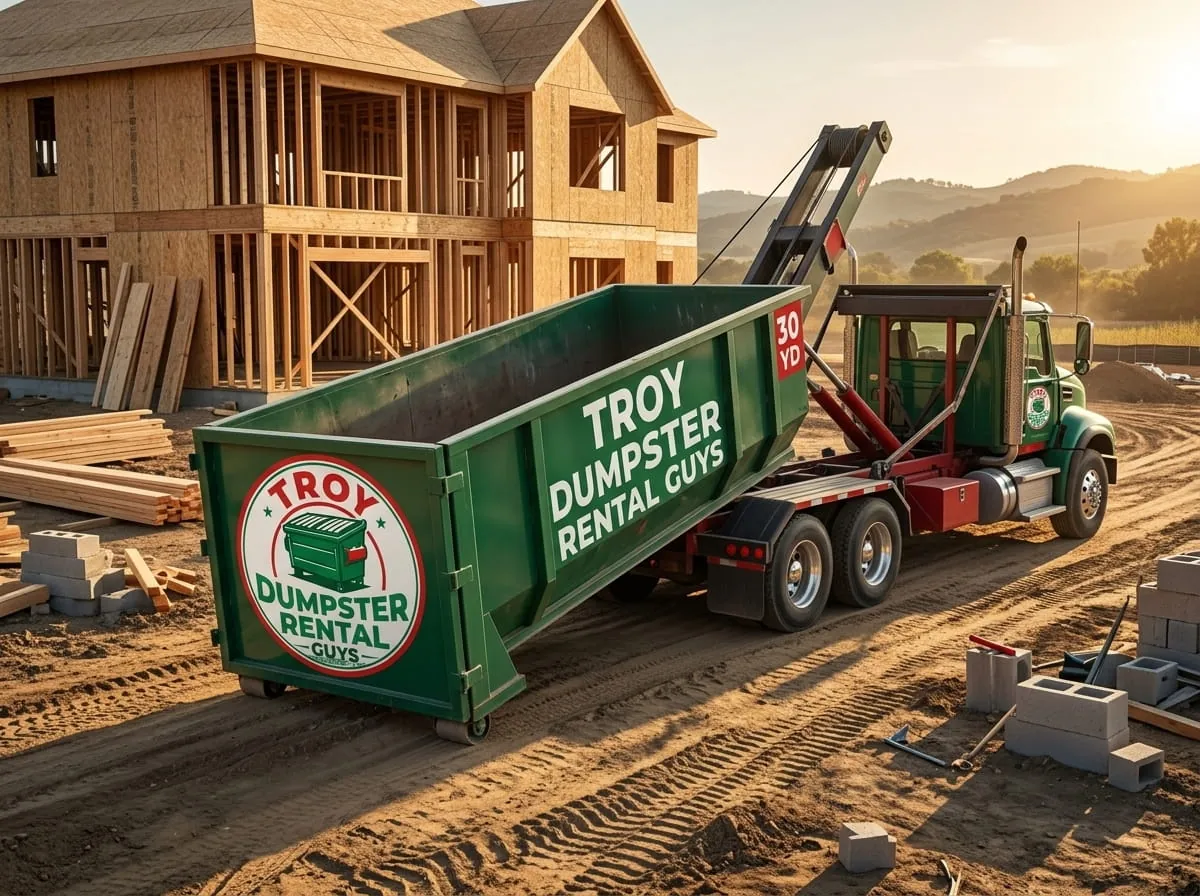
After years of dropping roll-off containers on driveways and job sites all over Troy and the greater Capital Region, the single question I hear more than any other is simple: "What size dumpster do I need?" It sounds basic, but getting the answer right saves you real money. Order too small and you're paying for a second haul or a swap-out. Order too big and you've wasted rental money on empty air, plus you've got a container that won't fit in a tight Lansingburgh driveway. This guide walks through the four common roll-off sizes, real dimensions, what each one actually holds, and how to match the bin to your project the way a local operator would.
The Four Roll-Off Sizes You'll Actually Use
Roll-off dumpsters are measured in cubic yards. That number tells you the volume the container holds, not its footprint or weight capacity. Here in Troy the vast majority of jobs land in one of four sizes: 10-yard, 15-yard, 20-yard, or 30-yard. Here's how they stack up in the real world.
| Size | Approx. Dimensions (L x W x H) | Holds (pickup truck loads) | Best For |
|---|---|---|---|
| 10-yard | 12 ft x 8 ft x 3.5 ft | 3-4 loads | Small cleanouts, single-room reno, heavy debris |
| 15-yard | 14 ft x 8 ft x 4 ft | 4-5 loads | Mid-size remodels, roofing, garage clean-out |
| 20-yard | 16 ft x 8 ft x 4.5 ft | 6-8 loads | Large renos, whole-room gut jobs, flooring |
| 30-yard | 22 ft x 8 ft x 6 ft | 9-12 loads | Whole-home renos, new construction, big cleanouts |
Notice the width stays right around 8 feet across the board. What changes is the length and, more importantly, the height. That matters a lot in Troy, where our older brownstones and rowhouses often have narrow shared driveways or on-street placement only. A 10 or 15-yard bin sits low and short, so you can toss debris over the wall by hand. A 30-yard bin is tall enough that you'll want a walk-in door or a debris chute for anything above waist height.
Volume Is Only Half the Story: Weight Limits and Overage Fees
This is the part that trips up most first-time renters, so pay attention. Every dumpster comes with a weight allowance included in the flat rental price, usually expressed in tons. Go over that limit and you pay an overage fee, typically charged per additional ton. A 10-yard bin might include 1 to 2 tons; a 30-yard might include 4 to 5 tons. Those numbers vary by hauler, so always ask when you book.
Why does this matter? Because volume and weight are two different constraints, and heavy material hits the weight cap long before the box looks full. You can max out the tonnage on a 10-yard container with concrete while the bin is only a third full by volume. That's not a mistake in the container size, that's physics. Which brings us to the single most common sizing error I see.
Here's how the overage math tends to play out on a real Capital Region invoice. Say your 20-yard rental includes 3 tons and you come in at 4.2 tons after a flooring tear-out that soaked up water from a wet basement. That extra 1.2 tons gets billed per ton on top of your flat rate. It's rarely a budget-buster on a single job, but it's money you never needed to spend if you'd planned the load. The fix is almost always about what you put in the bin, not the size you rented. Break down bulky items so they nest tightly, keep soaked carpet and rain-swelled debris out when you can, and never mix a pile of concrete into an otherwise light load.
Heavy Debris Needs a Small Bin, Not a Big One
If you're tearing out a concrete patio, an old brick chimney, a stone retaining wall, dirt, or asphalt, you want a 10-yard dumpster, full stop. Do not order a 20 or 30-yard for clean concrete or dirt. Here's why: those materials are so dense that a large container loaded to the top would be far too heavy to legally transport on Capital Region roads and far too heavy for the truck to lift. Haulers actually restrict heavy debris to smaller bins for this reason, often with a dedicated "clean fill" or "concrete only" rate. A half-full 10-yard of concrete is already pushing the truck's limit. Keep heavy and light debris separate, and keep the heavy stuff in the small box.
Matching Size to the Job: Troy Project Playbook
Let's get specific. Here's how I'd size the projects that come up most often around Rensselaer County. As a general rule, if you're on the fence between two sizes for a light, bulky load, the extra yards on the bigger bin cost far less than ordering a second smaller container when the first one fills up early. A swap-out means a fresh delivery fee, a fresh pickup, and a day of lost momentum on the job.
Bathroom Remodel (10-Yard)
A single bathroom gut, old vanity, tub, tile, drywall, fixtures, fits comfortably in a 10-yard. Tile and old cast-iron tubs are heavy, so the small bin also keeps you inside your weight allowance. This is the go-to for those tight rowhouse jobs where you only have room for a compact container along the curb. Check out our 10-yard dumpster page for exact specs.
Kitchen Remodel or Two Rooms (15-Yard)
Cabinets, countertops, flooring, and drywall from a kitchen add up fast in volume even though the weight is moderate. A 15-yard splits the difference nicely and is my most-requested size for mid-level home projects. It's also a smart pick for a garage or basement cleanout where you've got bulky but not especially heavy junk.
Roof Tear-Off (15 or 20-Yard)
Shingles are deceptively heavy, a square of asphalt shingles weighs 250 to 400 pounds. For a typical Troy single-family roof, a 15-yard usually does it, but for a larger home or a multi-layer tear-off, step up to the 20-yard. Watch your tonnage here; roofing is a classic overage-fee trap. If you're doing a full roof plus other debris, keep them separated so the heavy shingles don't blow past your weight cap.
Whole-Room or Flooring Reno (20-Yard)
Gutting a large room, ripping out old hardwood and subfloor across a whole floor, or a substantial basement finish, the 20-yard is the workhorse. It gives you volume for framing scrap, drywall, insulation, and flooring without the height challenge of the biggest bin. This is our most popular construction dumpster rental size for Capital Region contractors.
Whole-Home Renovation, New Construction, or Estate Cleanout (30-Yard)
When you're gutting an entire house, building an addition, or clearing out a full property, the 30-yard earns its keep. It holds 9 to 12 pickup loads and cuts down on swap-outs, which saves you both money and downtime. Just make sure you have the space. On many of Troy's dense downtown blocks a 30-yard means a street permit and careful placement, so plan ahead and check clearance for the delivery truck.
Troy-Specific Realities to Plan Around
Our city has character, and character comes with logistics. A few things I always flag for local customers:
- Tight driveways and shared alleys. Many South Troy and Lansingburgh homes have narrow driveways. Measure your access width before booking. If it's under about 10 feet of clear path, lean toward a 10 or 15-yard.
- Street placement and permits. If the bin has to sit on a public street, you'll likely need a permit from the city. We can walk you through it, but build the lead time into your schedule.
- Winter and freeze-thaw. Capital Region winters mean frozen ground and snowbanks. Don't let a plow bury your container placement zone, and give the delivery truck a clear, plowed approach.
- Older-home surprises. Brownstone and rowhouse renos routinely turn up more plaster, lath, and old masonry than people expect. If your project is a coin-flip between two sizes, size up on volume but stay mindful of weight if masonry is involved.
A Simple Rule of Thumb
When you're genuinely stuck between two sizes, ask two questions. First: is the debris heavy (concrete, dirt, tile, masonry, shingles)? If yes, favor the smaller bin and watch your tonnage. Second: is it bulky but light (furniture, cabinets, drywall, general junk)? If yes, size up, because you'll hit the volume limit before the weight limit and a swap-out costs more than the extra few yards would have. When in doubt on a Troy job, a quick phone call with the specifics beats guessing every time. For a full rundown of what you can and can't toss in the bin, see our guide on what can go in a dumpster.
Order the Right Size the First Time
Still not sure which container fits your project? That's exactly what we're here for. Give Troy Dumpster Rental Guys a call at (518) 720-6356 and tell us about your job, we'll recommend the right size, quote you a flat rate, and get a bin on your driveway fast. You can also reach out through our contact page to get started. Order the right size the first time, and the whole project goes smoother.
Founder, Troy Dumpster Rental Guys — sharing straight advice from more than 15 years of local hauling experience.
Frequently Asked Questions
What size dumpster do I need for a bathroom remodel in Troy?
A 10-yard roll-off is ideal for a single bathroom gut. It holds the vanity, tub, tile, and drywall while keeping you within your weight allowance, since tile and cast iron are heavy. It also fits the tight rowhouse driveways common around Troy.
Why do I need a small dumpster for concrete and dirt?
Concrete, dirt, brick, and asphalt are extremely dense. A large bin filled with them would be too heavy to legally haul on Capital Region roads and too heavy for the truck to lift. Haulers restrict heavy debris to 10-yard bins, and even a half-full one is near the weight limit.
What are dumpster overage fees and how do I avoid them?
Each dumpster includes a set weight allowance in tons. Go over it and you pay a per-ton overage fee. Avoid it by matching size to debris weight, separating heavy material like shingles or masonry, and asking your hauler for the included tonnage before you book.
What size dumpster is best for a roof tear-off?
For a typical Troy single-family roof, a 15-yard usually works. Step up to a 20-yard for a larger home or a multi-layer tear-off. Shingles are heavy, roughly 250 to 400 pounds per square, so watch your tonnage to avoid overage charges.
Do I need a permit to place a dumpster on the street in Troy?
If the container must sit on a public street rather than your driveway, you will likely need a permit from the city. We can walk you through the process, but plan for extra lead time. On-driveway placement usually needs no permit.