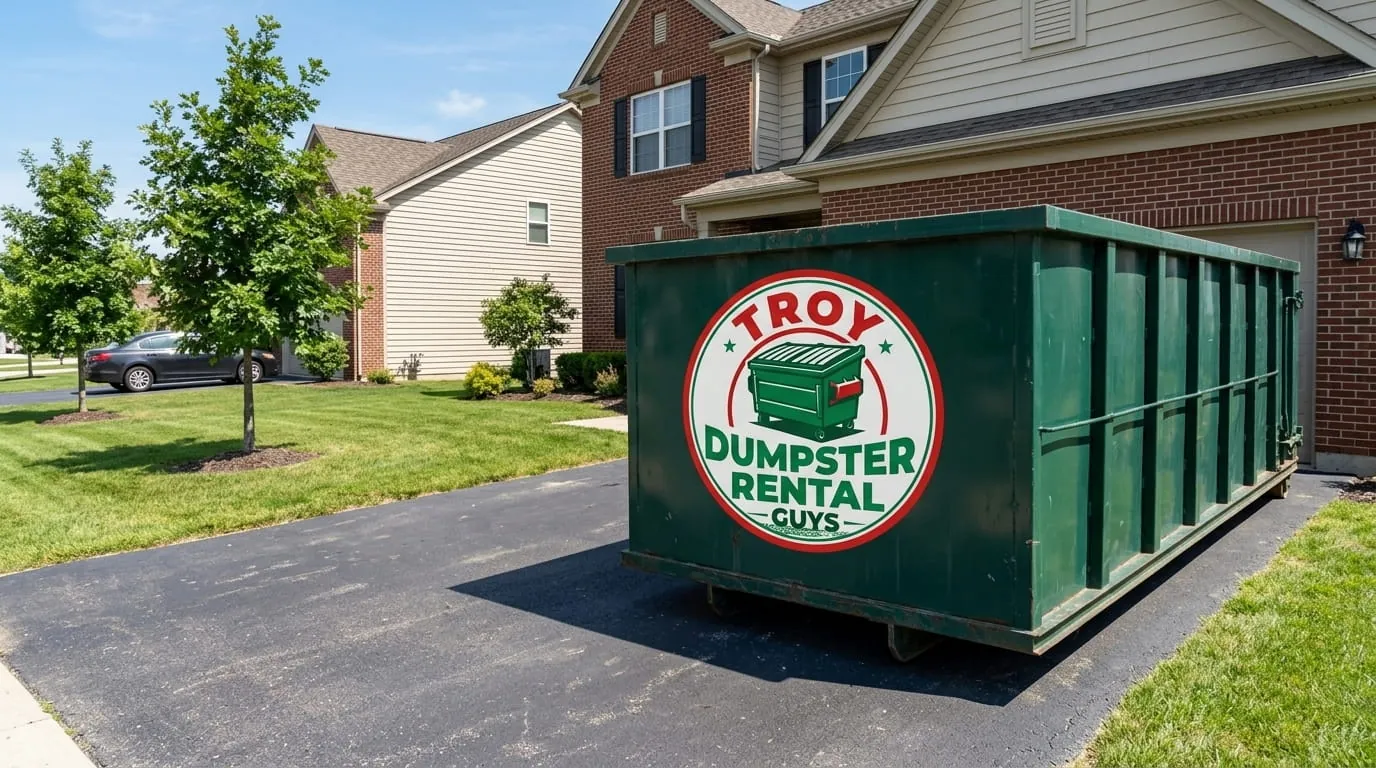
Why Roofing Debris Is a Different Animal
I have been dropping roll-off boxes on driveways around Troy and the greater Capital Region for a long time, and if there is one job that trips up homeowners more than any other, it is a roofing tear-off. People call, tell me they are redoing a "normal-sized" roof, and want the biggest dumpster I have. Then the box comes back so heavy the truck squats on its axles. Roofing waste is not like a garage cleanout or a kitchen remodel. Shingles are dense, saturated, and they add up fast. Choosing the right dumpster for a tear-off is almost entirely a weight problem, not a volume problem, and once you understand that, you will save yourself a small fortune in overage fees.
The mistake is easy to make. You look at a 20-yard or 30-yard container, you see all that open space, and you assume bigger is safer. With most debris that is true. With shingles it is exactly backward. A big box tempts you to keep piling, and asphalt shingles will blow through your weight allowance long before you ever fill the box to the top. That is why seasoned roofers around here almost always ask for a dedicated, smaller bin in the 10 to 15 yard range for a tear-off. Let me walk you through the math so you can size your own job with confidence.
The Shingle Weight Math That Actually Matters
Roofing is measured in "squares." One square equals 100 square feet of roof area, or a 10-foot by 10-foot patch. Shingles are sold and installed by the square, and most bundles cover one-third of a square, so it takes three bundles to make one square. That relationship is the backbone of every estimate you will make.
Now for weight. A standard three-tab asphalt shingle runs roughly 225 to 250 pounds per square. Heavier architectural or "dimensional" shingles, the kind on a lot of newer Troy homes, run 350 to 450 pounds per square. When you tear that off, you are not just hauling the shingles, you are hauling the underlayment, old felt, drip edge, and whatever moisture the roof soaked up over the years. A safe planning number for a single layer of asphalt is about 250 to 400 pounds per square in the dumpster.
Here is where it gets real. A modest 1,500 square foot roof is 15 squares. One layer of architectural shingle at 400 pounds per square is 6,000 pounds, or three tons, of debris. That is a single layer. If the roof has two layers, which is extremely common on older Capital Region houses, you double it to six tons. A lot of homeowners have no idea their tidy little ranch roof is going to produce that kind of tonnage.
| Roof size | Squares | 1 layer (approx.) | 2 layers (approx.) |
|---|---|---|---|
| 1,000 sq ft | 10 squares | 1.5 - 2 tons | 3 - 4 tons |
| 1,500 sq ft | 15 squares | 2.25 - 3 tons | 4.5 - 6 tons |
| 2,000 sq ft | 20 squares | 3 - 4 tons | 6 - 8 tons |
| 2,500 sq ft | 25 squares | 3.75 - 5 tons | 7.5 - 10 tons |
Compare that to what a dumpster can legally and safely carry down the road. A 10-yard box is typically rated for two to three tons of included weight, and a 15-yard box for three to four tons. See the collision? A two-layer tear-off on an average home can bury the weight allowance of even the larger bin. That is the whole reason roofing gets its own dedicated, smaller container.
Why Smaller Is Smarter for Tear-Offs
When customers ask me why I steer them toward a 10 or 15 yard box instead of something bigger, I tell them it is about matching volume to weight so you never load past what the truck can carry. A 10-yard dumpster holds plenty of cubic space for the shingles a two or three ton weight limit allows. If I gave you a 30-yard box, you would fill maybe a quarter of it before hitting the tonnage cap, and now you have a huge, half-empty container taking up your whole driveway and a bill for the extra weight anyway. The smaller box keeps you honest.
There is a practical loading benefit too. A lower-profile bin is easier to pitch shingles into from a ladder or off the roofline. Roofers throw debris down into an open-top box, and a 10 or 15 yard container with lower walls is far friendlier for that than a tall 30-yard behemoth. If you want the full breakdown of container dimensions and what fits, our guide on what size dumpster do I need lays it out, and you can look at the specs for our 10-yard dumpster and 15-yard dumpster side by side.
Estimating Your Squares Before You Call
You do not need to climb up with a tape measure to get a workable estimate. If you know your home's footprint, you can get close. Take the square footage of the floor the roof covers, then add for pitch and overhangs. A low-slope roof adds about 15 percent, a medium pitch adds around 25 to 30 percent, and a steep pitch can add 40 percent or more to the flat footprint. So a 1,200 square foot single-story house with a medium pitch is roughly 1,500 square feet of actual roof surface, or 15 squares.
The single most important question, though, is how many layers are up there. Grab a flashlight and look at a cut edge, at a vent, or where the shingles meet a wall. Count the courses. In Troy and the older neighborhoods around Lansingburgh and South Troy, I regularly find two and sometimes three layers on homes that have not been fully stripped in decades. Back in the day, roofers would shingle right over the old ones to save a day of labor. Each of those layers is another full round of tonnage you have to haul, so counting them is the difference between one dumpster and two.
Single Layer vs. Multiple Layers
If your roof has one layer and you plan to tear it off cleanly to the deck, use the single-layer column in the table above. If you have two layers, roughly double your weight. Three layers, triple it. A three-layer tear-off on even a small home can easily run five or six tons, and at that point you are almost certainly looking at either a second haul or splitting the job across two containers. It is always cheaper to plan for the swap up front than to discover it when the box is full and the crew is standing around waiting.
Nails, Underlayment, and the Stuff People Forget
A tear-off is more than shingles. Under those shingles is felt or synthetic underlayment, and depending on the roof, ice-and-water shield along the eaves, which we use heavily up here because of the winters. All of that comes off and goes in the box, and it carries its own weight, especially when it has absorbed moisture. Then there are the nails, thousands of them. A single square can have several hundred fasteners. They do not add much tonnage, but they matter for cleanup and for driveway protection, which I will get to in a second.
One rule I will not bend on: keep roofing debris as a clean, dedicated load. Do not toss in old lumber, appliances, or general junk. Mixed loads get harder to price and can complicate disposal at the transfer station, and pure shingle loads sometimes route to recycling rather than the landfill. If you have other material to get rid of, that is a separate conversation and possibly a separate roll-off dumpster rental. For the roof itself, keep it clean. We handle these tear-offs all the time through our roofing dumpster rental service and can help you plan the split.
Protecting Your Driveway During the Tear-Off
Every roofing job is a rain of debris, and a lot of it misses the box. Shingles, nails, and grit come down on whatever is below. The dumpster itself sits on your driveway for days with a heavy load pressing its rails and wheels into the surface. Two things protect you here. First, put plywood or boards under the container's contact points. A loaded roofing box is heavy, and on a hot Capital Region summer day, asphalt driveways soften and can dent or scar under the steel. Second, tarp the ground around the drop zone and along the eaves so the inevitable nail shower lands on something you can gather up and roll away. A single missed roofing nail in a driveway means a flat tire two weeks later, and everybody blames the dumpster company.
We take placement seriously and always set the box on boards, but a little prep on your end goes a long way. Our full walkthrough on how to protect your driveway during a dumpster rental covers the tarping and plywood setup in detail. Do it before the crew starts pitching debris, not after.
Placement Near the Roofline
Where the box sits matters more on a roofing job than almost any other. You want it directly below the section being torn off so the crew can throw debris straight down into it with the shortest possible travel. That cuts labor, keeps more debris in the box and off the lawn, and speeds the whole job. Before drop day, walk your property and pick the spot: close to the house, on a firm surface, clear of low branches and overhead wires, with room for the truck to swing in and set it. Tell us your plan when you book and we will position the container to match your tear-off, not just wherever is convenient for the truck.
The Troy and Capital Region Angle
Two local factors shape roofing jobs here. First, housing stock. Troy has a lot of homes that are seventy, a hundred, even a hundred and fifty years old, and many have been re-roofed by layering rather than stripping. When you finally do a full tear-off on one of these, you are often pulling two or three layers plus decades of accumulated underlayment. Budget for more tonnage than a newer suburban home of the same footprint.
Second, snow load and weather timing. Our roofs carry heavy snow and ice all winter, which is exactly why homeowners here invest in ice-and-water shield and quality underlayment, all of which ends up in your dumpster. It is also why most tear-offs happen in the warmer months, from late spring through early fall, when the deck can be exposed safely. That is our busy season, so if you are planning a summer roof, book your container early. A saturated old roof torn off after a wet spell weighs noticeably more than a dry one, so if you can pull the trigger during a dry stretch, your load will be lighter and your weight risk lower.
Avoiding Overage Fees
Overage fees are the number one surprise on roofing jobs, and they are almost always avoidable. The fee comes from going over the included tonnage on your rental. Since we now know a tear-off is a weight game, here is how to stay clean:
- Count your layers honestly and use the two-layer or three-layer numbers if that is what you have. Guessing low is how you get a surprise bill.
- Match the box to the weight, not the volume. A 10 or 15 yard box sized to your tonnage beats an oversized box you will overload anyway.
- For big or multi-layer roofs, plan a swap. It is normal and expected to run two containers on a large tear-off. We can pull a full one and drop an empty the same day.
- Keep the load clean and shingle-only so pricing stays predictable.
- Tear off during dry weather when you can, so you are not paying to haul away rainwater.
The honest truth is that a five-minute conversation before the job beats any guess off a website. Tell me your roof's footprint, your pitch, and how many layers you are pulling, and I will tell you exactly which box to take and whether you should plan on one or two. That is the whole point of talking to a local operator instead of clicking through a form. Take a look at our full services lineup, or just get in touch and we will size your tear-off right the first time.
Ready to plan your roofing tear-off? Call Troy Dumpster Rental Guys at (518) 720-6356 and we will get the right dumpster on your driveway on the right day.
Founder, Troy Dumpster Rental Guys — sharing straight advice from more than 15 years of local hauling experience.
Frequently Asked Questions
What size dumpster do I need for a roof tear-off in Troy?
For most single-family roofing tear-offs we recommend a dedicated 10 or 15 yard dumpster. Roofing debris is very heavy, so you hit the weight limit long before you fill a larger box. Size the container to your tonnage, not the volume: a 10-yard box handles a smaller single-layer roof, while a 15-yard box suits larger or heavier jobs. On multi-layer roofs, common in Troy, you may need two hauls.
How much does a roof's worth of shingles weigh?
Roofing is measured in squares, where one square is 100 square feet and takes three bundles. A single layer of asphalt shingle weighs roughly 250 to 400 pounds per square once you include underlayment. A 1,500 square foot roof is 15 squares, so a single layer runs about 2 to 3 tons and two layers can reach 4.5 to 6 tons. That tonnage, not volume, is what determines your dumpster size.
Why do I need a smaller dumpster for shingles instead of a big one?
Because roofing debris is dense, a big box tempts you to keep loading past the weight the truck can legally carry, which triggers overage fees. A 10 or 15 yard container has plenty of cubic space for the shingles your two-to-four ton allowance permits, and its lower walls make it much easier to pitch debris in from the roofline. Matching a smaller box to the weight keeps costs predictable and avoids a half-empty oversized bin.
How do I know if my Troy home has multiple shingle layers?
Look at a cut edge of the roof, a vent, or where shingles meet a wall, and count the courses with a flashlight. Many older Capital Region homes were re-roofed by layering over the old shingles rather than stripping them, so two or three layers is common. Each extra layer roughly adds another full round of tonnage, so counting layers before you book is essential to sizing the right container.
How can I avoid overage fees on a roofing dumpster?
Count your shingle layers honestly and use the multi-layer weight numbers, match the dumpster to your tonnage rather than its open volume, keep the load shingle-only, and tear off during dry weather so you are not hauling absorbed rainwater. For large or multi-layer roofs, plan a swap: running two containers is normal and cheaper than discovering an overage mid-job. Call us and we will size it right.