If you are renting a roll-off dumpster in Troy, one question comes up again and again once the truck pulls into the neighborhood: is that heavy steel box going to leave marks on my driveway? It is a fair worry. A loaded 20-yard container can weigh several tons, and it rides on narrow steel rails or small wheels that concentrate all of that weight onto a few square inches of your surface. On a hot August afternoon on a Capital Region asphalt driveway, or during a January freeze-thaw swing, that pressure can absolutely leave a dent, a scuff, or in the worst case a crack.
The good news is that driveway damage is almost entirely preventable. After years of setting containers on driveways all over Rensselaer County, we have learned exactly what protects a surface and what causes problems. This guide walks you through why roll-offs mark asphalt and concrete, how to protect your driveway with simple boards and plywood, and what a good hauler should be doing automatically so you never have to think about it.
Why Roll-Off Dumpsters Can Mark or Crack a Driveway
A roll-off dumpster is not a gentle piece of equipment. Understanding the three forces at work makes it obvious why a little preparation goes a long way.
Concentrated Point Loads
Empty, a standard roll-off container weighs between 3,000 and 6,000 pounds depending on size. Once you start filling it with roofing shingles, concrete, dirt, or construction debris, the total load can climb to 8,000 pounds or well beyond. That weight does not spread out evenly. It rests on the container's rear wheels and on the two steel rails or feet that run along the bottom. Those contact points are small, so the pounds per square inch at each spot are enormous. This is the same reason a woman in stiletto heels can dent a wood floor that a heavy man in flat shoes never marks. The problem is not total weight so much as how tightly that weight is focused.
Asphalt Softens in the Heat
Asphalt is not a rigid material. It is a flexible blend of aggregate and petroleum-based binder, and that binder gets soft when it gets hot. On a bright summer day in Troy, the surface temperature of a black asphalt driveway can reach 130 to 140 degrees even when the air feels like a comfortable 85. Warm asphalt behaves a little like firm clay. Set a concentrated load on it and the surface can slowly deform, leaving depressions where the wheels and rails sat. A container placed at 9 a.m. and picked up three days later at peak afternoon heat has plenty of time to press in a set of permanent dimples.
Freeze-Thaw Stress in the Northeast
Our winters do the opposite kind of damage. The Capital Region runs through dozens of freeze-thaw cycles every cold season. Water seeps into tiny pores and hairline cracks in asphalt and concrete, then freezes and expands by roughly nine percent, prying the material apart from the inside. A driveway that is already stressed by that cycling is more brittle and more likely to crack under a heavy point load. Add the extra weight of a snow-and-ice covered container and you have a recipe for spider cracking, especially near existing weak spots and edges. Older Troy driveways that have weathered many winters are the most vulnerable.
Concrete and Brick Pavers Have Their Own Weak Points
Concrete does not soften in heat the way asphalt does, but it is rigid and brittle, so it fails by cracking rather than denting. A heavy load set down hard on an unsupported section, or on a slab with existing control-joint cracks, can chip or crack it. Brick and interlocking pavers are a different story altogether. They are individual units set on a sand bed, and a concentrated load can push single pavers down out of alignment, crack them, or rut the sand base beneath. Many of Troy's historic and renovated homes have beautiful paver aprons and driveways, and those need the most careful treatment of all.
The Simple Fix: Boards, Plywood, and Weight Distribution
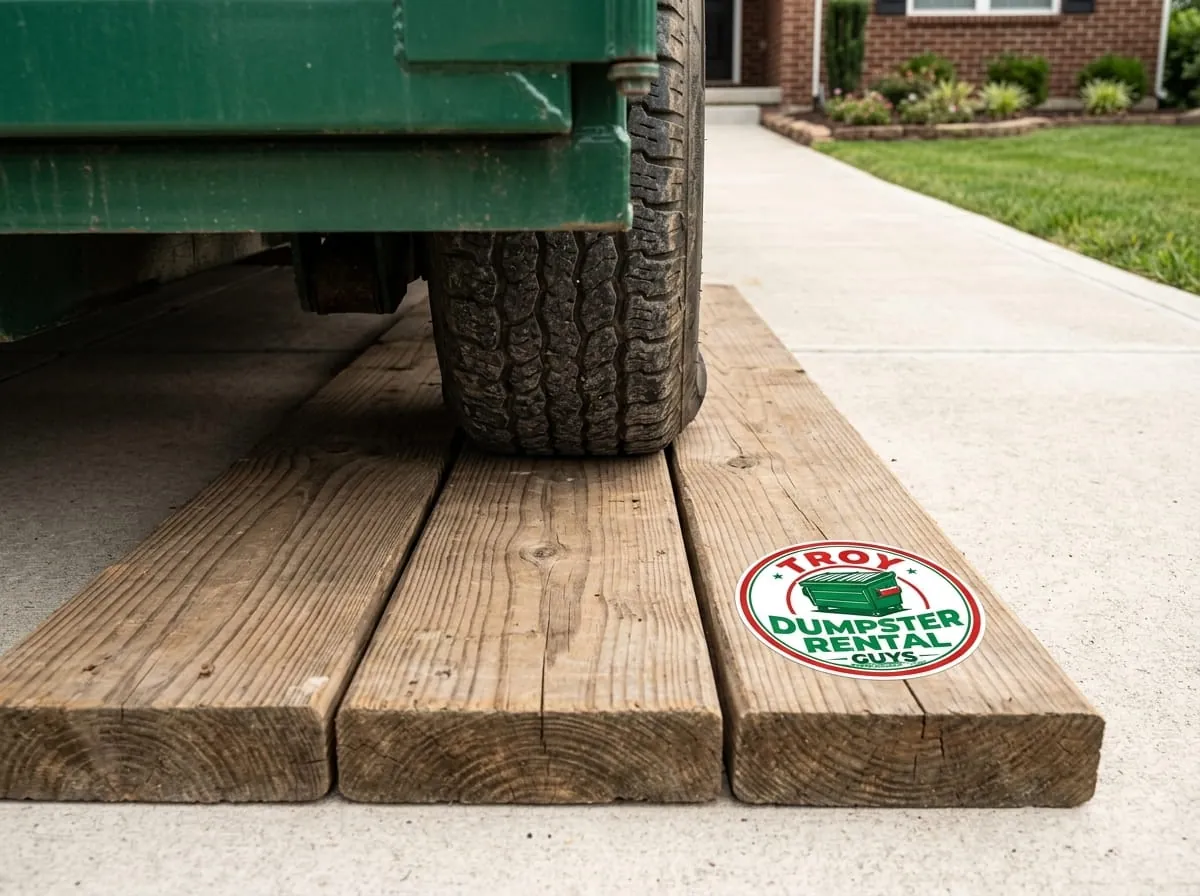
Almost every driveway concern disappears when you put a barrier between the container and your surface. The principle is spreading the load. Instead of letting all that weight ride on a few square inches of steel, you place something underneath that takes the pressure and distributes it across a much larger area.
What to Put Under the Dumpster
- Two-by-tens or two-by-twelves under the rear wheels. These are the highest-pressure contact points. A pair of solid boards under each wheel spreads that concentrated load and, just as importantly, gives the wheels a sacrificial surface to rest and roll on instead of your asphalt.
- Plywood sheets under the full footprint. For extra protection, especially on hot days or on softer asphalt, lay down three-quarter-inch plywood across the area where the container will sit. This creates a rigid platform that carries the load across a broad surface.
- Boards under the front contact points and the truck's landing gear. When the driver rolls the container off the truck, the front of the box and the loading rails touch down first. Protecting those spots matters just as much as protecting where the box finally rests.
Why This Works
A single wheel might press with hundreds of pounds per square inch onto bare pavement. Set that same wheel on a two-by-ten and the load spreads across the full width and length of the board, dropping the pressure at any one point to a fraction of what it was. That is usually the difference between a mark and no mark. The boards also act as a wear layer, so any scuffing happens to the wood rather than to your driveway. When you are ready to size your container, our guide on what size dumpster you need can help you pick a footprint that fits comfortably in your available space.
Placement Matters as Much as Protection
Where the container sits is the other half of the equation. A well-placed dumpster puts less stress on your driveway and is easier for the driver to deliver and retrieve cleanly.
Choose the Strongest, Flattest Spot
The middle of a driveway is generally stronger than the edges. Asphalt edges lack lateral support and crumble more easily, so keeping the container away from the outer few inches protects the most fragile part of the surface. Look for the flattest available area too. A container on a slope puts uneven pressure on the downhill contact points and is harder to load safely.
Mind Troy's Narrow and Older Driveways
Many homes in Troy and the surrounding Capital Region towns were built long before oversized vehicles were the norm. Driveways can be narrow, short, or flanked by tight garage entries, retaining walls, and mature trees. Before delivery day, walk your driveway and note the width, any overhead branches, and how much straight-line room the truck has to back in. If your driveway simply cannot accommodate a large container, a compact 10-yard dumpster has a smaller footprint and is far easier to place on a tight city lot. When you book, tell us about any constraints so we can bring the right equipment and plan the approach.
Protect Pavers and Aprons
If your driveway or the apron at the street is brick or interlocking pavers, point it out when you schedule. We can plan to set the container fully on plywood, or position it on a more forgiving section, so those individual units are never asked to carry a concentrated steel load.
Backing, Loading, and Unloading Without Damage
Damage does not only happen while the box sits still. The delivery and pickup are the moments of highest risk because that is when heavy steel is moving.
The Delivery and Pickup
An experienced driver lowers the container slowly and controls the roll-off so it does not slam down or drag across the surface. Dragging is what causes those long gouges and scrape marks you sometimes see on driveways. A careful setdown onto pre-placed boards keeps everything smooth. This is one of the biggest reasons to choose a hauler who does this every day rather than the cheapest name you can find. Our team handles roll-off dumpster rental with driveway protection built into the routine.
How You Load the Container
- Distribute weight evenly. Do not pile all the heavy material at one end. Spread dense debris like concrete, dirt, and shingles across the floor of the container so the load sits evenly on the contact points.
- Do not overload past the fill line. An overloaded box is heavier than the driveway and the truck were planned for, and it is unsafe to haul. Staying within the rated capacity protects both your surface and everyone on the road.
- Keep the doors and immediate area clear. If you are wheeling heavy loads up to the container, avoid running loaded wheelbarrows repeatedly over the same soft spot of asphalt on a hot day.
If your project is a roofing job, the debris is heavy and dense, and weight distribution becomes even more important. Our guide on choosing the right dumpster for a roofing tear-off covers how to size and load one of these projects safely.
What a Good Hauler Does Automatically
You should not have to become a driveway-protection expert to rent a dumpster. A professional hauler builds these safeguards into the job so you do not have to. Here is what to expect from a company that takes your property seriously.
- Asks about your surface when you book. Asphalt, concrete, and pavers each call for a slightly different approach, and the time to plan is before the truck arrives.
- Brings and places protective boards. A good driver arrives ready to set the container on boards or plywood without being asked, especially on hot days or delicate surfaces.
- Lowers and lifts with control. No dragging, no dropping. The container is eased down onto its protection and lifted cleanly at pickup.
- Places the box in the strongest, flattest, safest spot. An experienced driver reads your driveway and chooses a position that protects both the surface and the equipment.
- Plans around Troy's weather and driveways. That means accounting for summer heat, winter freeze-thaw, and the tight, older layouts common across the Capital Region.
We treat every driveway as if it were our own. You can learn more about how we work on our services page, and if you have questions about your specific driveway we are always happy to talk it through before you book.
A Quick Driveway-Protection Checklist
| Step | Why It Matters |
|---|---|
| Lay boards under wheels and rails | Spreads concentrated point loads and prevents dents and scrapes |
| Use plywood on hot days or soft asphalt | Stops summer heat from letting the surface deform under pressure |
| Place on the flat center, away from edges | Uses the strongest part of the driveway and avoids fragile edges |
| Flag pavers, brick, or a delicate surface | Lets the hauler plan full plywood coverage or a safer position |
| Distribute weight and stay under the fill line | Keeps the load even and within safe capacity for surface and road |
| Choose an experienced local hauler | Careful delivery and pickup prevent the worst gouges and cracks |
Rent With Confidence in Troy
Protecting your driveway during a dumpster rental is not complicated. It comes down to spreading the weight with a few boards, choosing a smart placement, loading evenly, and working with a hauler who does this every single day. Do those things and your asphalt, concrete, or pavers will look exactly the same after the project as they did before the container arrived. That is the whole goal.
Troy Dumpster Rental Guys serves Troy and the greater Capital Region with residential and commercial roll-off rentals, and we build driveway protection into every delivery. If you are planning a cleanout, remodel, or roofing job and want to talk through the best container and placement for your property, call us at (518) 720-6356 or reach out through our contact page. We are glad to help you get it right the first time.
Founder, Troy Dumpster Rental Guys — sharing straight advice from more than 15 years of local hauling experience.
Frequently Asked Questions
Will a dumpster damage my asphalt driveway?
It can if no precautions are taken, especially on a hot Troy summer day when asphalt softens and a heavy container's wheels and rails press in dimples. The fix is simple: place boards or plywood under the wheels and contact points to spread the weight, choose a flat central spot, and work with a hauler who lowers the box carefully instead of dragging it. With those steps, asphalt damage is almost entirely preventable.
What should I put under a dumpster to protect my driveway?
Use two-by-ten or two-by-twelve boards under the rear wheels, which are the highest-pressure points, and add three-quarter-inch plywood sheets under the full footprint on hot days or softer asphalt. Also protect the front contact points where the container first touches down during delivery. These barriers spread the load and act as a sacrificial wear layer so any scuffing hits the wood, not your surface.
Do I need to protect a concrete or paver driveway too?
Yes. Concrete does not soften like asphalt but it is brittle and can crack under a hard point load, particularly near existing control-joint cracks. Brick and interlocking pavers are the most vulnerable because individual units can be pushed down, cracked, or rutted into the sand base. If your driveway or apron is pavers, tell us when you book so we can set the container fully on plywood or choose a more forgiving position.
How does the Capital Region winter affect my driveway during a rental?
Our freeze-thaw cycles are hard on driveways. Water seeps into pores and hairline cracks, freezes, expands, and pries the material apart, leaving asphalt and concrete more brittle and crack-prone. A heavy container, sometimes covered in snow and ice, adds concentrated stress on an already weakened surface. Older Troy driveways are the most at risk, so proper boards and careful placement matter even more in the cold months.
What does a good hauler do to prevent driveway damage?
A professional hauler asks about your surface when you book, arrives ready to place protective boards or plywood, lowers and lifts the container with control rather than dragging or dropping it, and positions the box in the strongest, flattest, safest spot. They also plan around Troy's narrow older driveways and Capital Region weather. Troy Dumpster Rental Guys builds all of this into every delivery. Call (518) 720-6356 to plan your rental.