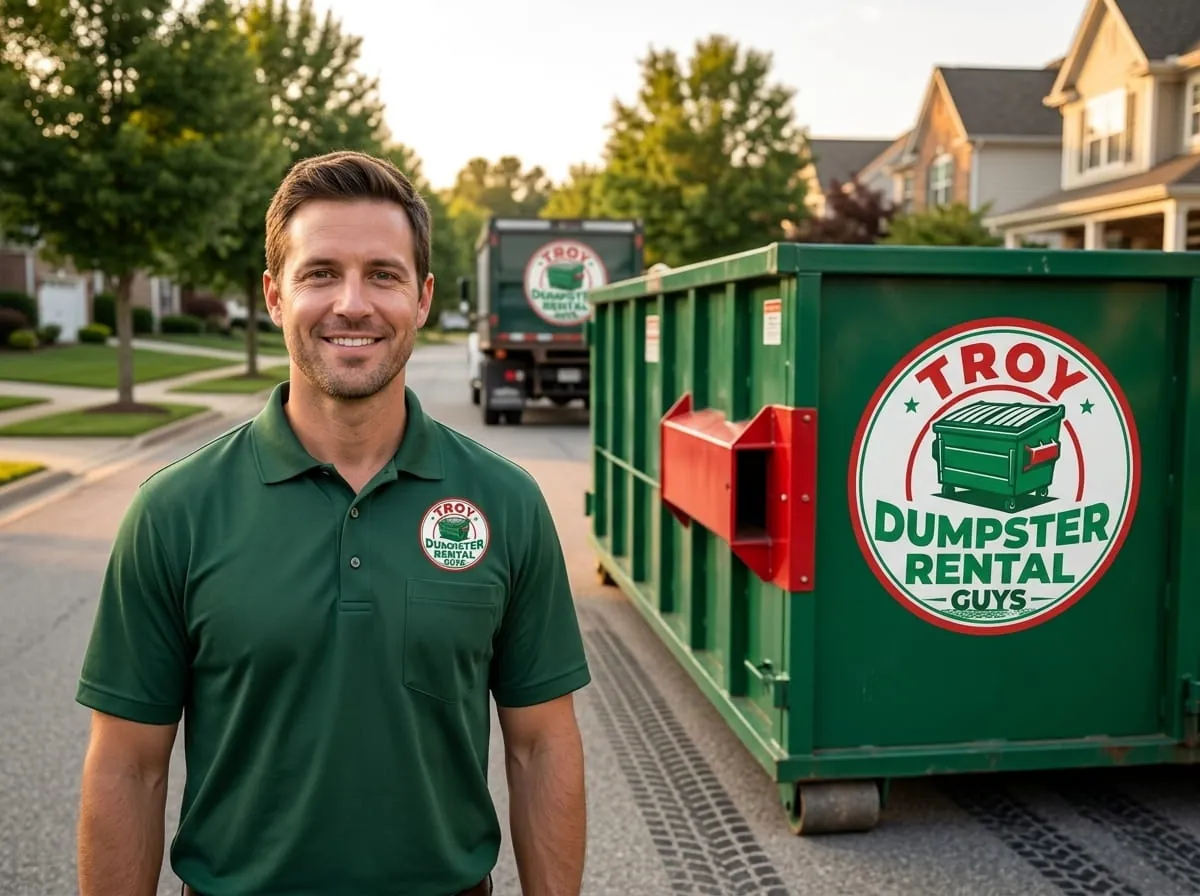
If you live or run a business in Troy, New York, sorting out what goes in your curbside bin, what belongs at the transfer station, and what needs a rented dumpster can feel more complicated than it should. Between City of Troy collection rules, Rensselaer County programs, and New York State DEC regulations, there are a lot of moving parts. This guide from Troy Dumpster Rental Guys breaks down how waste and recycling actually work around the Collar City and the wider Capital Region, so you can keep more material out of the landfill and handle big cleanouts the right way.
How Waste and Recycling Work in Troy and Rensselaer County
Troy sits on the east bank of the Hudson River in Rensselaer County, and like most municipalities in the Capital Region it runs a combination of weekly trash collection and single-stream recycling for residential households. Single-stream means your paper, cardboard, metal, glass, and accepted plastics generally go into one recycling container rather than being separated by hand. That convenience is great for participation rates, but it also means contamination is a constant problem. When the wrong items end up in the bin, whole loads can be downgraded or rejected at the materials recovery facility.
Collection schedules, accepted materials, and container requirements are set locally and do change from time to time. Before you rely on any specific rule, confirm the current details directly with the City of Troy Department of Public Works, Rensselaer County, or the New York State Department of Environmental Conservation (DEC). What we cover below is the general framework that holds true across the region, but the exact dates, drop-off sites, and accepted-item lists are the parts you should verify.
What Belongs in Curbside Recycling
Curbside single-stream recycling in the Troy area is designed for clean, dry, everyday household packaging. When in doubt, remember the phrase "empty, clean, and dry." Food residue, liquids, and grease are the enemies of a good recycling load. Here is what typically belongs in your recycling container:
- Paper and cardboard: newspaper, office paper, mail, magazines, paperboard boxes, and flattened corrugated cardboard. Keep it dry and free of food grease.
- Metal cans: aluminum beverage cans and steel food cans, rinsed out.
- Glass bottles and jars: rinsed, with lids handled per local rules.
- Plastic containers: bottles, jugs, and tubs, usually those marked with accepted resin codes. Confirm which numbers your program takes, because this varies.
Just as important is knowing what does not belong at the curb. These common items contaminate loads or jam sorting equipment and should be kept out:
- Plastic bags and film (return clean bags to store drop-off programs where available)
- Styrofoam and foam takeout containers
- Food-soiled paper, pizza boxes with grease, and used paper plates
- Garden hoses, wires, cords, and chains, which "tangle" the machinery
- Scrap wood, textiles, and large rigid plastics
- Anything with a battery, electronics, or hazardous chemicals
What Needs a Dumpster or a Trip to the Transfer Station
Curbside collection is built for the steady, modest stream of household trash and recycling. It is not built for the surge of material that comes with a renovation, an estate cleanout, a move, or a major decluttering project. When the volume or the type of material outgrows your bins, you have two realistic options: haul it yourself to a transfer station, or rent a roll-off dumpster and let the debris come to you.
A transfer station works for smaller quantities if you have a truck, the time, and the willingness to make repeat trips and pay per-load tipping fees. For anything larger, a dumpster is almost always more efficient. Here is the kind of material that generally does not fit in curbside collection:
| Material Type | Better Handled By |
|---|---|
| Renovation debris (drywall, lumber, flooring) | Roll-off dumpster or C&D transfer facility |
| Roofing shingles | Dedicated dumpster (heavy; weight limits apply) |
| Furniture and large household junk | Dumpster rental or junk removal service |
| Concrete, brick, and clean fill | Specialized dumpster for heavy inert material |
| Whole-house cleanout volume | 10 to 30 yard roll-off dumpster |
If you are unsure whether an item can even go in a container, our guide on what can go in a dumpster walks through the accepted and prohibited lists in plain language. For a full menu of container sizes and options, see our services page.
Construction and Demolition Debris Diversion
Construction and demolition (C&D) debris is one of the biggest waste streams in any building project, and it is also one of the most divertible. Much of what comes out of a Troy renovation, clean wood, metal, concrete, brick, and cardboard, can be recycled or reused instead of buried. New York State actively encourages C&D recycling, and many regional facilities are set up to recover these materials when they arrive reasonably sorted.
Diversion starts on the job site. Separating clean scrap metal and cardboard from mixed debris, keeping concrete and masonry apart from general trash, and setting aside reusable fixtures can dramatically cut what ends up in the landfill. When you rent a dumpster for a project, talk to us about how you plan to load it. Keeping heavy inert materials like concrete in their own container, for example, is both a diversion strategy and a way to stay under weight limits. Our detailed walkthrough on how to dispose of construction debris covers sorting strategies that make diversion easier and cheaper.
Why Diversion Matters Locally
Landfill space in the region is finite and disposal costs continue to climb. Every ton of clean cardboard, metal, or masonry that gets recovered instead of dumped reduces tipping costs and extends the life of local facilities. Responsible diversion is not just an environmental gesture; on a large project it is often the more economical path once you account for the difference in disposal rates between recyclable and mixed loads.
Household Hazardous Waste
Some of the most common items in a garage or basement are exactly the ones you must never put in the trash, the recycling bin, or a dumpster. Household hazardous waste (HHW) includes paints and solvents, motor oil and antifreeze, pesticides and fertilizers, pool chemicals, propane cylinders, and similar products. These materials can be dangerous to collection crews, can contaminate other recyclables, and can pollute soil and the Hudson River watershed if they reach a landfill.
Rensselaer County and neighboring municipalities periodically host household hazardous waste collection events and may operate designated drop-off locations. Because these dates and sites change from year to year, do not assume last season's schedule still applies. Check the current Rensselaer County and New York DEC listings for upcoming HHW collection days and accepted materials before you load anything into your vehicle. When you book a dumpster with us, we will remind you which categories of hazardous material have to be routed to those programs instead.
Electronics and E-Waste
New York's Electronic Equipment Recycling and Reuse Act bans many electronics from the regular trash, which means old TVs, computers, monitors, printers, and similar devices should not go in your curbside container or a general-purpose dumpster. E-waste contains recoverable metals as well as substances that need controlled handling.
Retail take-back programs, manufacturer mail-back options, and county-supported e-waste collection events are the usual routes for responsible electronics disposal in the Troy area. Availability and accepted device lists vary, so confirm current options through Rensselaer County or the DEC. If a cleanout turns up a pile of old electronics alongside general junk, our junk removal team can help you separate the e-waste stream from what is safe to throw in the dumpster.
Yard Waste and Organics
Leaves, grass clippings, brush, and branches are seasonal realities in the Capital Region, and they are handled differently from regular trash. Yard waste is often collected on its own schedule or accepted at designated sites for composting or mulching, keeping valuable organic material out of the landfill where it would otherwise generate methane. Troy and surrounding towns typically ramp up leaf and brush collection in fall and spring, but the exact windows shift each year, so verify current dates locally.
For large property cleanups, storm cleanup, or clearing an overgrown lot, the volume of organic debris can quickly exceed what curbside yard-waste collection will take. That is where a dedicated container or a hauling service makes sense. Our yard waste removal service is built for exactly these bigger jobs, whether it is a season's worth of brush or the aftermath of a downed tree.
How Renting a Dumpster Fits Large Cleanouts
When a project generates more waste than your bins and a couple of transfer-station runs can handle, a roll-off dumpster becomes the simplest, most cost-effective tool. A container sits in your driveway or on the job site for the duration of the work, you fill it on your own schedule, and we handle the hauling and proper disposal or diversion at the other end. That single decision eliminates repeated trips, keeps debris contained and off the ground, and lets you focus on the actual work instead of logistics.
Common Troy scenarios where a dumpster earns its keep include home renovations, roof replacements, estate and hoarding cleanouts, basement and garage clear-outs, moving purges, and landscaping overhauls. Choosing the right size matters: too small and you pay for extra hauls, too large and you pay for capacity you never use. For household-scale projects our residential dumpster rental options cover the most common sizes, and we are happy to help you match the container to the job.
A dumpster also supports the diversion goals we described earlier. Because we know the regional facilities, we can steer clean loads toward recovery rather than straight disposal, and we can flag the items, hazardous waste, electronics, and certain heavy materials, that have to be handled separately. Responsible disposal is easier when the container strategy is set up correctly from day one.
Putting It All Together in Troy
Good waste management in Troy comes down to matching each material to the right pathway: clean packaging to curbside recycling, hazardous and electronic items to the proper county and state programs, organics to yard-waste collection or removal, and the big surge of renovation and cleanout debris to a rented dumpster that supports diversion. Keep contamination out of your recycling, verify the current schedules and drop-off sites with the City of Troy, Rensselaer County, and NY DEC, and lean on professional hauling when the volume outgrows the curb.
Ready to tackle a big cleanout or renovation the responsible way? Troy Dumpster Rental Guys can get the right container to your Troy or Rensselaer County property and make sure as much material as possible is diverted rather than dumped. Call us at (518) 720-6356 or reach out through our contact page to get started.
Founder, Troy Dumpster Rental Guys — sharing straight advice from more than 15 years of local hauling experience.
Frequently Asked Questions
What goes in curbside recycling in Troy, NY?
Troy's single-stream recycling generally accepts clean, dry paper and cardboard, aluminum and steel cans, glass bottles and jars, and accepted plastic containers. Keep out plastic bags, foam, food-soiled paper, hoses, cords, electronics, and anything hazardous. Because accepted-item lists change, confirm current rules with the City of Troy Department of Public Works or Rensselaer County.
Where can I drop off household hazardous waste in Rensselaer County?
Paints, solvents, motor oil, pesticides, pool chemicals, and propane cylinders must never go in the trash, recycling, or a dumpster. Rensselaer County and nearby municipalities periodically host household hazardous waste collection events and may run designated drop-off sites. These dates and locations change year to year, so check current Rensselaer County and NY DEC listings before you go.
Can I put construction debris in curbside collection?
No. Drywall, lumber, flooring, shingles, concrete, and other construction and demolition debris are not accepted at the curb. Bring smaller amounts to a C&D transfer facility, or rent a roll-off dumpster for larger projects. Sorting clean wood, metal, and masonry on site helps divert material from the landfill and can lower disposal costs.
How do I dispose of old electronics in Troy?
New York law bans many electronics from regular trash, so TVs, computers, monitors, and printers cannot go in curbside bins or a general dumpster. Use retail take-back programs, manufacturer mail-back options, or county-supported e-waste collection events. Availability varies, so confirm current options with Rensselaer County or the NY DEC.
What size dumpster do I need for a home cleanout?
It depends on the volume. A small garage or basement clear-out may fit a 10-yard container, while a whole-house or renovation cleanout often calls for a 20 or 30-yard roll-off. Heavy materials like concrete need their own container due to weight limits. Call Troy Dumpster Rental Guys at (518) 720-6356 and we will match the size to your project.