Clearing out the home of someone you love is one of the hardest jobs a family ever takes on. In Troy, where so many houses have stood for a century or more and stayed in the same family across generations, the task carries extra weight. The full basement holds decades of tools and canning jars. The attic is packed to the rafters with steamer trunks, holiday decorations, and boxes no one has opened since the 1970s. Every room holds a memory, and every memory slows the work. This checklist is meant to help you move through an estate cleanout with both compassion and a plan, so the practical decisions do not become a second source of grief.
Take a breath before you begin. There is no prize for finishing fast, and the goal is not to erase a life but to honor it while responsibly settling the home. What follows is a room-by-room, step-by-step approach built for Capital Region houses and the realities of grief, probate, and older Troy construction.
Start With What You Cannot Replace: Secure Valuables and Documents First
Before a single box goes to donation and long before you rent a dumpster, your first job is protection. Estate cleanouts move fast once they get going, and irreplaceable items disappear into trash bags when the sorting gets hurried. Walk the whole house once with a notebook and a box marked "Do Not Touch," and pull anything in these categories out of circulation immediately.
- Legal and financial documents: the will, trust papers, deeds, vehicle titles, insurance policies, bank and investment statements, Social Security cards, birth and death certificates, and tax returns. In older Troy homes these are often tucked in a bedroom dresser, a fireproof box in the basement, or the back of a desk drawer.
- Cash and hidden money: older generations frequently kept cash in books, coat pockets, freezer containers, coffee cans, and mattresses. Do not throw out anything soft or bound without checking it first.
- Jewelry, watches, coins, and precious metals, along with the small original boxes and appraisal papers that establish their value.
- Keys, safe deposit box information, passwords, and anything that grants access to accounts or storage.
- Family photographs, letters, military records, and genealogy materials. These are the items families regret losing most. When in doubt, keep the box and sort it later in a calm moment, not on cleanout day.
- Medications, which should be gathered and taken to a pharmacy or a police-department drug take-back box rather than tossed.
Photograph the interior of each room before you move anything. If the estate is contested or if multiple heirs are involved, this simple record prevents disputes about what was present and where.
Understand the Roles and the Timeline Before You Sort
An estate cleanout is not just a physical project; it sits inside a legal process. In New York, the person with authority to distribute or dispose of property is usually the executor named in the will, or an administrator appointed by the Rensselaer County Surrogate's Court when there is no will. Nothing of value should leave the house until that authority is clear and the heirs understand the plan.
Questions to Answer First
- Who is the executor or administrator, and have they given the go-ahead to begin?
- Is the estate going through probate, and are there deadlines tied to selling the home or filing an inventory?
- Are there specific bequests in the will, meaning certain items are promised to certain people?
- Is the house being sold, rented, or kept, and what is the target date to have it empty?
Getting these answers early prevents the most painful mistake in any cleanout: giving away or discarding something that was legally spoken for, or that a sibling assumed they were receiving. When the timeline is tight, such as a pending real estate closing, working backward from the empty-house date tells you how aggressively you need to schedule sorting, donation pickups, and hauling.
The Five-Pile Sorting System
Once valuables are secured and roles are clear, the heart of the work is sorting. The simplest method that actually holds up under emotional load is five destinations. Label bins, painter's-tape zones on the floor, or whole rooms so everyone helping uses the same categories.
- Keep: items an heir wants or that carry genuine sentimental or monetary value. Keep this pile honest and small; not everything can be kept.
- Distribute: items promised to specific people or claimed by heirs. Tag these with names right away so there is no confusion later.
- Donate: usable clothing, furniture, housewares, books, and working goods that no one in the family needs.
- Sell: antiques, collectibles, quality furniture, tools, and anything with resale value worth the effort.
- Dispose: broken, soiled, expired, or genuinely worthless items, plus the sheer volume of ordinary stuff that fills an old house.
Work one room at a time and finish it before moving on. A half-sorted house in every room is overwhelming; a fully cleared room is proof of progress and gives everyone a lift. If you want a granular, drawer-by-drawer framework to pair with these piles, our room-by-room home cleanout checklist breaks down each space in detail.
Pace the Emotion, Not Just the Boxes
Estate cleanouts are physically tiring and emotionally exhausting, and the two multiply each other. Build in breaks. Decide in advance that you will not make final decisions about the most loaded items, such as photo albums, a wedding dress, or a workshop full of a father's tools, on the first pass. Set those aside in the Keep pile and revisit them when the pressure of the day is off. If a particular room belongs to one person emotionally, let that person lead there and step back. Grief does not run on a schedule, and forcing speed through a bedroom often causes conflict that outlasts the cleanout by years.
Donation, Consignment, and Selling in the Capital Region
A great deal of what fills a Troy home is perfectly usable, and finding it a second life eases both the workload and the heart. The Capital Region has strong options for rehoming goods.
- Donation: Habitat for Humanity Capital District ReStore accepts furniture, appliances, cabinetry, and building materials and can often arrange pickup of larger loads. Goodwill and Salvation Army locations around Troy, Watervliet, and Latham take clothing, housewares, and smaller furniture. Local parishes and community closets welcome coats and linens, especially heading into an upstate winter.
- Consignment and resale: for quality antiques and mid-century furniture, which older Troy homes produce in abundance, a consignment shop or a local estate-sale company can turn items into money for the estate. Antique dealers along the region's main streets will sometimes make house calls for a promising collection.
- Estate sales and auctions: when a house is genuinely full of sellable goods, hiring an estate-sale professional to run a weekend sale can clear a large share of the contents and generate proceeds at the same time. What does not sell can roll straight into donation and disposal.
- Specialty buyers: coins, stamps, records, firearms, and jewelry each have dedicated local buyers who pay more than a general reseller. It is worth a few phone calls before these go in a donation box.
Whatever route you choose, get donation receipts for the estate's tax records, and keep a simple log of what was sold and for how much so the executor can account for it.
What Size Dumpster for an Estate Cleanout?
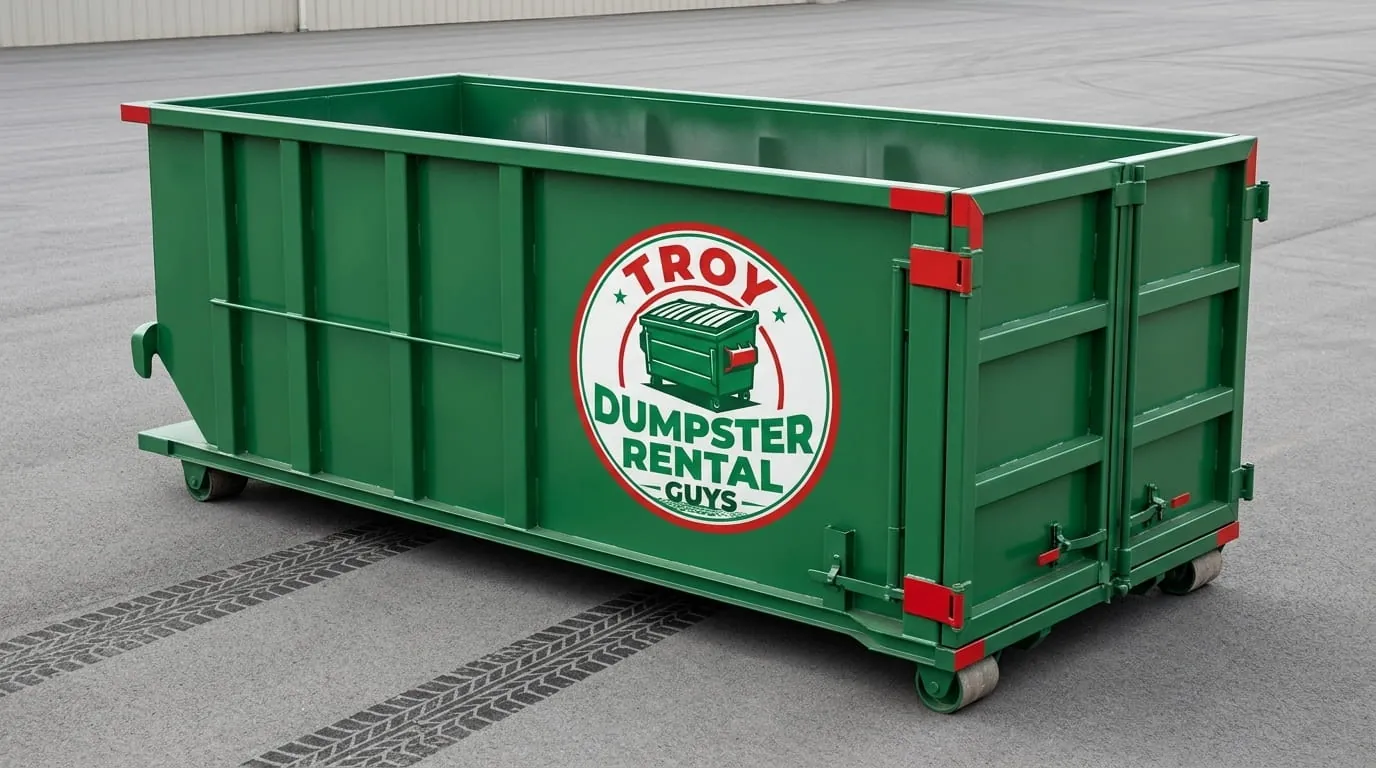
After the keeping, distributing, donating, and selling, what remains is the true volume of a lifetime, and it is almost always more than families expect. A full old house in Troy, once you count a packed basement and a stuffed attic, routinely produces far more debris than a car or pickup can handle in reasonable trips. This is where a roll-off dumpster changes the whole project from an endless slog into a contained, finishable job.
- 10-yard dumpster: suitable for a single heavily cluttered room, a modest basement, or a partial cleanout where most items are being donated or sold rather than trashed.
- 20-yard dumpster: the workhorse for most estate cleanouts. A 20-yard dumpster handles the contents of a typical two- or three-bedroom Troy home, including furniture, general household junk, and the accumulated contents of a full basement, without paying for space you will not use.
- 30-yard dumpster: the right call for large multi-generational homes where the basement and attic are both packed, or when decades of a family business or hobby have piled up alongside the household goods.
A few Troy-specific realities matter here. Many homes in the city and surrounding hill neighborhoods have narrow driveways, on-street parking only, or tight access between houses. Talk through placement before delivery so the container sits where it is legal and reachable, and ask about a street permit if there is no driveway. Some materials, such as paint, chemicals, tires, and certain electronics, cannot go in a standard dumpster, so set those aside for proper disposal. If you are unsure which size fits your situation, our team is glad to talk it through and recommend honestly. You can see the full lineup on our services page, and our dedicated estate cleanout service is built specifically for jobs like this one.
When to Hire Help
Families often try to do everything themselves out of a sense of duty, and sometimes that is right. But an estate cleanout is heavy, hazardous, and slow, and there is no shame in bringing in help, especially when time or physical ability is limited. Consider hiring out when the basement stairs are steep and the appliances heavy, when heirs live out of town and only have a weekend, when the volume is simply beyond a small family, or when the emotional strain makes the work impossible to face alone.
Junk removal crews can carry the heavy and unwanted items out for you, while a dumpster lets your family work at its own pace over several days. Many estate cleanouts use both: a dumpster in the driveway for the steady day-by-day sorting, plus a junk removal crew for a final heavy push on furniture and appliances. Match the help to the part of the job that is hardest for your family, and keep the parts that matter, the sorting of the personal and the sentimental, in your own hands.
A Gentle Order of Operations
- Secure valuables, documents, cash, and photographs first.
- Confirm the executor's authority and the timeline before disposing of anything.
- Sort room by room into keep, distribute, donate, sell, and dispose.
- Route donations and sellable goods to Capital Region charities, consignment, and estate sales.
- Rent the right-sized dumpster, most often a 20-yard, for the remaining volume.
- Bring in junk removal or extra hands for the heavy and the hard.
- Give yourself grace, and take the time you need.
You do not have to figure out the dumpster piece alone. Troy Dumpster Rental Guys works with Capital Region families through estate cleanouts every week, and we understand that this is more than a hauling job. We will help you choose the right container, place it where your street and driveway allow, and keep the process simple so you can focus on your family. Call us at (518) 720-6356 or reach out through our contact page whenever you are ready, and we will handle the rest with the care this work deserves.
Founder, Troy Dumpster Rental Guys — sharing straight advice from more than 15 years of local hauling experience.
Frequently Asked Questions
What should I do first in an estate cleanout?
Secure the irreplaceable before anything else. Walk the whole house and pull out legal and financial documents, the will, cash hidden in books or containers, jewelry, coins, keys, medications, and family photographs. Photograph each room before moving items, especially if multiple heirs are involved, so nothing valuable is lost in the sorting and there are no disputes later.
Who has the authority to dispose of items in an estate?
In New York, it is usually the executor named in the will, or an administrator appointed by the Rensselaer County Surrogate's Court when there is no will. Nothing of value should leave the house until that authority is clear and the heirs agree on the plan. Watch for specific bequests in the will, since certain items may be legally promised to certain people.
What size dumpster do I need for an estate cleanout in Troy?
A 20-yard dumpster handles most estate cleanouts, covering the contents of a typical two- or three-bedroom Troy home including a full basement. Choose a 10-yard for a single room or partial cleanout, and a 30-yard for large multi-generational homes where both the basement and attic are packed. If you are unsure, call us and we will recommend the right size honestly.
Where can I donate or sell items in the Capital Region?
Habitat for Humanity Capital District ReStore takes furniture, appliances, and building materials, while Goodwill and Salvation Army locations near Troy accept clothing and housewares. For antiques and quality furniture, consider a consignment shop, a local antique dealer, or an estate-sale company. Keep donation receipts and a log of sales for the estate's records.
Should I hire help or do the cleanout myself?
It depends on the volume, the access, and your family's capacity. Many families rent a dumpster to sort at their own pace over several days and add a junk removal crew for heavy furniture and appliances or a final push. Hire help when the basement stairs are steep, heirs are out of town, or the emotional strain makes the work too much to face alone.